45 label the structures of the skin and subcutaneous tissue.
Solved Label the structures of the skin and subcutaneous ... Label the structures of the skin and subcutaneous tissues. Hypodermis Dermis Deep fascia Epidermis Hair Nerve Sebaceous gland Question : Label the structures of the skin and subcutaneous tissues. Nursing Interventions and Rationales: Impaired Tissue integrity Jul 22, 2013 · 8. Monitor for correct placement of tubes, catheters, and other devices. Assess skin and tissue affected by the tape that secures these devices (Faller, Beitz, 2001). Mechanical damage to skin and tissues as a result of pressure, friction, or shear is often associated with external devices. 9.
Anatomy and Physiology of the Skin - ONS The skin is continuous, with the mucous membranes lining the body’s surface (Kanitakis, 2002). The integumentary system is formed by the skin and its derivative structures (see Figure 1-1). The skin is composed of three layers: the epidermis, the dermis, and subcutaneous tissue (Kanitakis, 2002). The outermost
Label the structures of the skin and subcutaneous tissue.
This image shows structures of the skin and subcutaneous ... This image shows structures of the skin and subcutaneous tissue. ________ are found in the layer of the skin represented as "2". A.Collagen and living keratinocytes B. Collagen and dead keratinocytes C. Collagen and fibroblasts D.Elastic fibers and melanocytes E. Elastic fibers and dendritic cells C. Collagen and fibroblasts Bloom's Level: 3. Function And Structure of Skin And Subcutaneous Tissue ... Structure of The Skin And Subcutaneous Tissue The skin is thickest in areas subjected to wear and tear (abrasion), such as the soles of the feet, where it may be 6 mm in thickness. It is thinnest on the eyelids, eardrums, and external genitalia, where it averages about 0.5 mm in thickness. Hypodermis (Subcutaneous Tissue): Function & Structure Skin grafts treat damaged or missing skin that can't heal on its own. Skin grafts help people with deep skin damage or loss from burns, infections and ulcers. Skin substitutes. Skin substitutes include cells or tissue taken from another person (allograft), cells or tissue taken from an animal (xenograft) or skin made from nonbiological ...
Label the structures of the skin and subcutaneous tissue.. Structure of Skin - Explore its Parts and Function Skin is the largest organ of the human body. It is an impressive and vital organ. It is a fleshy surface with hair, nerves, glands and nails. It consists of hair follicles which anchor hair strands into the skin. It acts as a barrier between outside and inside environment. 5.1 Layers of the Skin - Anatomy & Physiology The hypodermis (also called the subcutaneous layer or superficial fascia) is a layer directly below the dermis and serves to connect the skin to the underlying fascia (fibrous tissue) surrounding the muscles. It is not strictly a part of the skin, although the border between the hypodermis and dermis can be difficult to distinguish. Skin Anatomy - EnchantedLearning.com Under these two skin layers is a fatty layer of subcutaneous tissue (the word subcutaneous means "under the skin"). On average, an adult has from 18-20 square feet (about 2 square meters) of skin, which weighs about 6 pounds (2.7 kg). Glossary. blood vessels - Tubes that carry blood as it circulates. Arteries bring oxygenated blood from the ... Label the structures of the skin and subcutaneous tissues ... Recall that the skin is composed of two layers, the epidermis and dermis. Beneath the dermis lies the subcutaneous layer or hypodermis. Most of the specialized structures associated with the skin are found in the dermis.
Structure and Function of Skin | Biology for Majors II The skin is composed of two main layers: the epidermis, made of closely packed epithelial cells, and the dermis, made of dense, irregular connective tissue that houses blood vessels, hair follicles, sweat glands, and other structures. Beneath the dermis lies the hypodermis, which is composed mainly of loose connective and fatty tissues. PreLab03a Integument & Prelab03b Integument Histology - Quizlet composed of 2 layers contains hair follicles contains sweat glands Bottom layer: also known as subcutaneous composed of loose areolar and adipose tissue contains sweat glands Place the following layers in order from superficial too deep. epidermis dermis hypodermis fascia lata (deep fascia) muscle Subcutaneous Tissue Is the Innermost Layer of Skin Subcutaneous tissue, which is also known as the hypodermis , is the innermost layer of skin. It's made up of fat and connective tissues that house larger blood vessels and nerves, and it acts as an insulator to help regulate body temperature. 1 The thickness of this subcutaneous layer varies throughout the body and also from person to person. Bio 232 ~ Lab Midterm Flashcards - Quizlet Correctly label the following areas on a slide of areolar connective tissue. Correctly label the following areas on a slide of skeletal muscle. Organs are composed of more than one tissue type working together to perform a specific set of functions.
Ch 6 quiz - Integumentary System Flashcards | Quizlet Memorize flashcards and build a practice test to quiz yourself before your exam. Start studying the Ch 6 quiz - Integumentary System flashcards containing study terms like Place the following layers in order from superficial to deep., Label the structures of the integument., Skin cells play an important role in producing and more. Structure of the Skin - Course Hero The skin itself has two major tissue layers⎯the epidermis and the dermis. The epidermis is the outermost layer of skin, comprised of several sublayers. This layer of skin contains many cells, each called a keratinocyte, a keratin-producing cell found in the skin.Keratin is the structural protein that lends durability and water impermeability to skin, hair, and nails. Solved Label the structure of the skin and subcutaneous ... Experts are tested by Chegg as specialists in their subject area. We review their content and use your feedback to keep the quality high. Answer: The labelling has been done acoording to the c …. View the full answer. Transcribed image text: Label the structure of the skin and subcutaneous tissues. Layers of the Skin | Anatomy and Physiology I - Lumen Learning The hypodermis (also called the subcutaneous layer or superficial fascia) is a layer directly below the dermis and serves to connect the skin to the underlying fascia (fibrous tissue) of the bones and muscles. It is not strictly a part of the skin, although the border between the hypodermis and dermis can be difficult to distinguish.
32 Label The Skin Structures And Areas Indicated In The Accompanying ...
Skin and Soft Tissue Substitutes - Medical Clinical Policy ... The DermaClose RC Continuous External Tissue Expanders are sterile, single-patient use skin anchors that are made of 316L surgical stainless steel. These skin anchors are placed about 1.5 cm from the edge of the wound, and they penetrate the skin to 4.5 mm into the subcutaneous tissue, and are held in place with 2 standard skin staples.
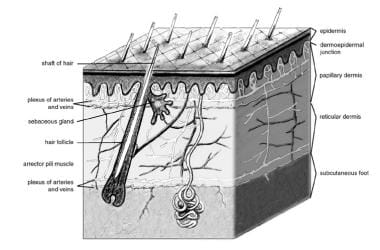
Dermabrasion: Practice Essentials, Background, Anatomy
Skin Anatomy: The Layers of Skin and Their Functions Subcutaneous tissue is the innermost layer of the skin. It is mostly made up of fat, connective tissues, larger blood vessels, and nerves. 5 The majority of your body fat is stored in the subcutaneous layer. It not only insulates you against changing temperatures but protects your muscles and internal organs from impacts and falls.
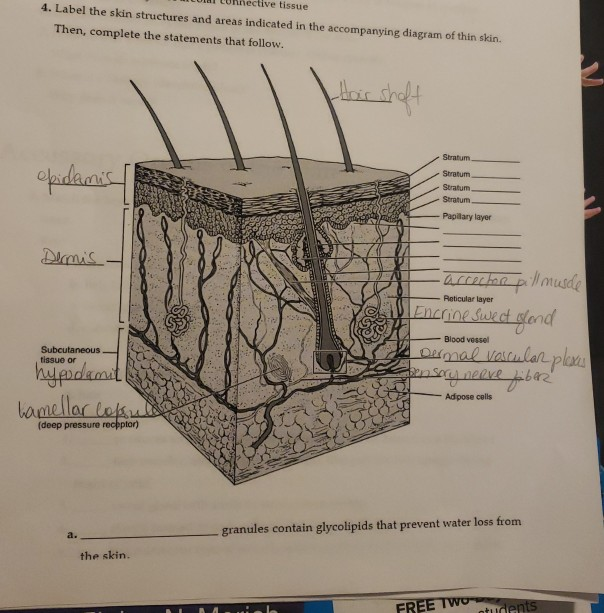
Solved: Tive Tissue 4. Label The Skin Structures And Areas... | Chegg.com
Solved Label the structures of the skin and subcutaneous ... Question: Label the structures of the skin and subcutaneous tissues. Dermis Book Hypodermis Hair Print ferences Epidermis Nerve Deep fascia Hair Sebaceous gland The Moon Companies Recom This problem has been solved! See the answer labels the structures of the skin and subcutaneous tissue Show transcribed image text Expert Answer 100% (48 ratings)

Chapter 6 Integumentary Questions flashcards | Quizlet
The Skin | Boundless Anatomy and Physiology For example, while the skin harbors many permanent and transient bacteria, these bacteria are unable to enter the body when healthy, intact skin is present. Our skin is made of three general layers. In order from most superficial to deepest they are the epidermis, dermis, and subcutaneous tissue. The Epidermis. The epidermis is a thin layer of ...
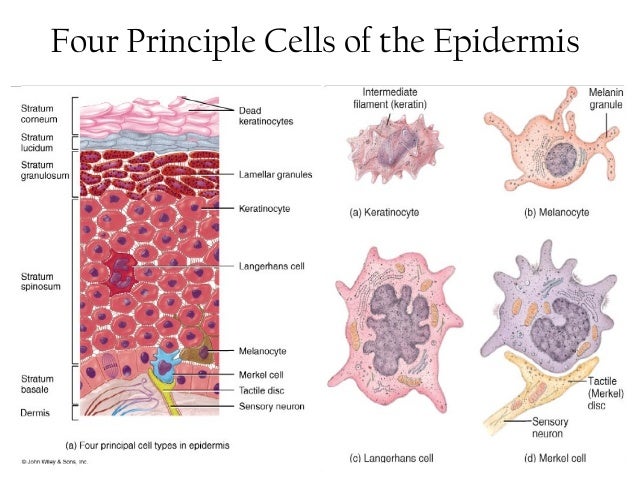
Skin anatomy & physiology for ayush students
Subcutaneous Adipose Tissue Diseases: Dercum Disease ... Subcutaneous adipose tissue diseases involving adipose tissue and its fascia, also known as adipofascial disorders, represent variations in the spectrum of obesity. The adipofascia diseases discussed in this chapter can be localized or generalized and include a common disorder primarily affecting women, lipedema, and four rare diseases, familial multiple lipomatosis, angiolipomatosis, Dercum ...
Dermabrasion: Practice Essentials, Background, Anatomy
Skin 1: the structure and functions of the ... - Nursing Times Skin conditions are visible - in this skin-, beauty- and image-conscious society, the way patients are accepted by other people is an important consideration for nurses. Summary. This article gives an overview of the structure and functions of the skin. Part 2 will provide an overview of the accessory structures of the skin and their functions.
Post a Comment for "45 label the structures of the skin and subcutaneous tissue."